
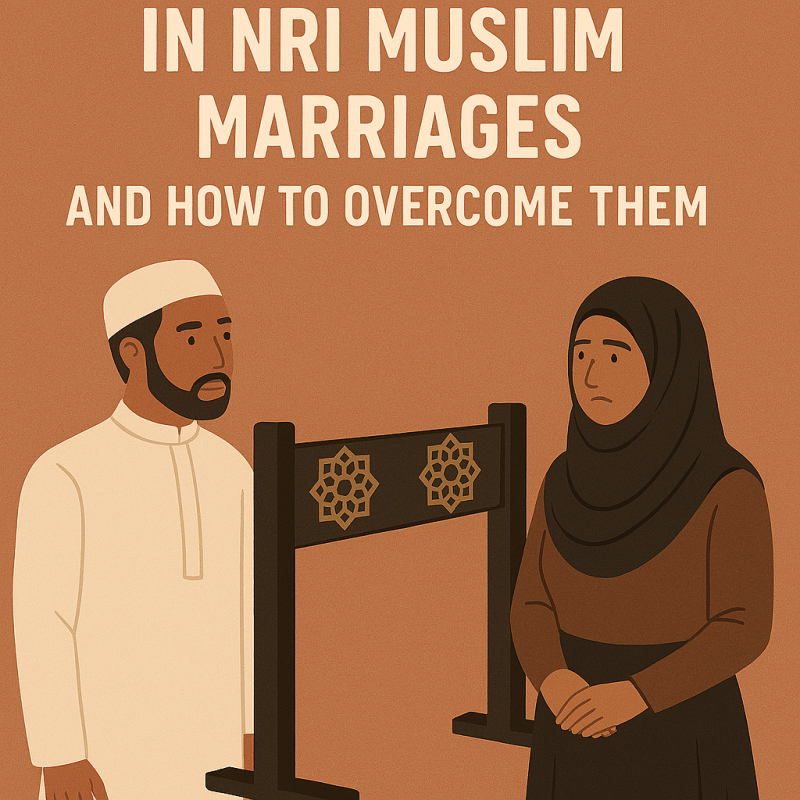
Cultural Hurdles in NRI Muslim Marriages and How to Overcome Them
In an increasingly globalized world, Non-Resident Indian (NRI) Muslims frequently seek spouses from India or within diaspora communities. These unions promise shared faith and heritage but often encounter significant cultural friction. Living abroad for years shapes NRIs differently—through exposure to Western individualism, secular norms, and diverse lifestyles—while families in India may cling to traditional South Asian customs. Even when both partners share Islam, subtle divergences in practices, expectations, and worldviews emerge as hurdles. Addressing these proactively strengthens marriages and honors Islamic teachings of mutual respect and compassion.
1. Generational and Acculturation Gaps
Many NRI Muslims, especially those raised or long-settled abroad, adopt more flexible lifestyles compared to relatives in India. This creates mismatches in expectations around daily routines, social interactions, and religious observance.
For instance, an NRI groom might view casual mixed-gender gatherings as normal, while a bride from a conservative Indian background sees them as inappropriate. Similarly, time abroad can dilute emphasis on extended family obligations, leading to perceptions of detachment.
Solutions:
- Prioritize open pre-marital discussions about lifestyle adjustments.
- Focus on core Islamic values over cultural add-ons—Islam promotes balance, not rigid adherence to one culture.
- Engage in joint activities like attending Islamic classes together to align on faith-based priorities.
- Set boundaries early with families, explaining decisions respectfully while affirming love and duty.
2. Differing Views on Gender Roles and Household Dynamics
Cultural interpretations of gender responsibilities vary widely. In some Indian Muslim families, traditional expectations place heavy domestic duties on wives, while NRIs abroad often embrace egalitarian partnerships influenced by host societies.
This can spark conflicts over career ambitions, financial contributions, or decision-making. A wife accustomed to independence might resist overly patriarchal norms, or a husband could feel pressured by family to enforce them.
Solutions:
- Ground discussions in Quranic principles of mutual rights and kindness (Quran 4:19).
- Negotiate roles collaboratively before marriage, perhaps with a written agreement on shared responsibilities.
- Seek guidance from knowledgeable imams or counselors who emphasize equity in Islam.
- Celebrate flexibility as a strength—many successful couples blend traditions to create hybrid homes.
3. Extended Family Interference and In-Law Expectations
NRI marriages frequently involve strong ties to families in India, leading to pressure on traditions like lavish weddings, dowry-like customs (though un-Islamic), or frequent visits. In-laws may expect the spouse to conform fully to "back home" norms, causing resentment.
Geographical distance amplifies misunderstandings—phone calls or visits highlight differences in communication styles, food preferences, or child-rearing.
Solutions:
- Establish clear boundaries as a couple, presenting a united front.
- Educate families gently about Islamic limits on extravagance or interference (Quran emphasizes leaving and cleaving to form a new family unit).
- Schedule regular, positive interactions like video calls to build rapport without overwhelming demands.
- Involve neutral third parties, such as elders respected by both sides, to mediate.
4. Language Barriers and Communication Styles
Even when speaking the same language, nuances differ—NRIs might use more English-influenced Urdu or direct expressions, while Indian partners favor indirect, context-heavy communication rooted in respect and hierarchy.
Misinterpretations arise easily, especially in emotional moments or when discussing sensitive topics like finances or intimacy.
Solutions:
- Practice active listening and clarify intentions frequently.
- Learn basic phrases or cultural references from each other's background to foster empathy.
- Use written communication for important matters to avoid tone misreads.
- Attend workshops on intercultural communication tailored for Muslim couples.
5. Child-Rearing and Identity Conflicts
Raising children becomes a flashpoint: Should they learn primarily Urdu/Arabic, adopt Western holidays subtly, or follow strict desi customs? NRIs often want balanced identities—Muslim first, with pride in Indian roots—while families push for stronger ties to homeland traditions.
This leads to debates over schooling, media exposure, or cultural immersion.
Solutions:
- Agree on Islam as the primary identity filter—teach Quran, prayer, and ethics universally.
- Blend elements thoughtfully: Celebrate Eid with desi foods but incorporate host-country activities.
- Involve children in both cultures through travel, stories, or community events.
- Regularly revisit parenting plans as a team, adjusting with mutual consent.
6. Navigating Prejudices, Stereotypes, and External Pressures
Subtle biases persist within Muslim communities—preferences for certain ethnicities, skin tones, or class backgrounds—despite Islam's rejection of racism. NRIs face additional scrutiny: "too Westernized" or "not traditional enough."
Media portrayals or community gossip can heighten insecurities.
Solutions:
- Reaffirm Islamic equality (Quran 49:13)—character and piety matter most.
- Build confidence through supportive networks, like online Muslim NRI groups.
- Challenge biases kindly when encountered, modeling tolerance for children.
- Focus on shared deen (faith) to transcend superficial differences.
NRI Muslim marriages hold immense potential for growth, blending the best of heritage and modernity while rooted in faith. Challenges arise not from incompatibility but from unaddressed assumptions. By centering Islam—emphasizing mercy, patience, and consultation (shura)—couples transform hurdles into opportunities for deeper understanding.
Success stories abound: couples who thrive by prioritizing dialogue, seeking knowledge, and viewing differences as enriching. Ultimately, a strong NRI Muslim marriage reflects tawhid—unity in diversity—creating homes that honor Allah and nurture future generations with balanced identities.