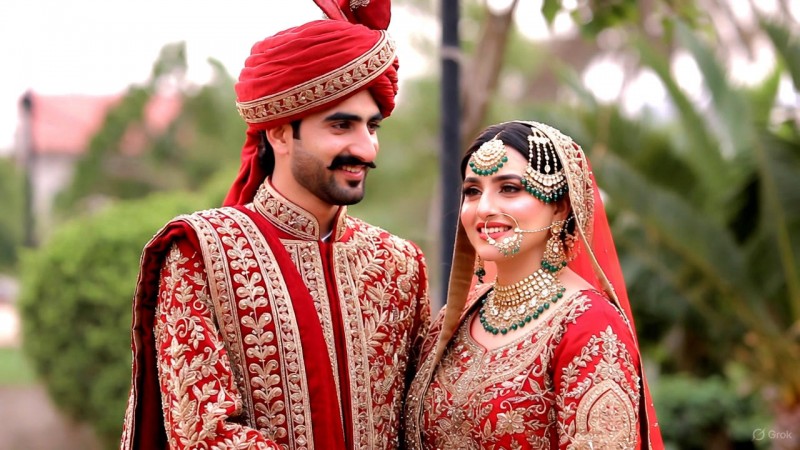
For Muslim couples embarking on the beautiful journey of marriage, the Nikah is far more than a ceremony; it's a sacred covenant, a blessed contract that unites two souls in the sight of Allah (SWT). In an age where weddings can become overwhelmingly complex and materialistic, returning to the simple, profound, and Halal foundations of the Nikah process is a blessing in itself.
This comprehensive guide is designed to walk you and your partner through the essential steps of planning your Nikah, ensuring it is filled with Barakah (blessing) from the very beginning. Let's navigate this beautiful path, from understanding the Mahr to saying "Qabiltu" (I accept).
Step 1: The Foundation - Intentions and Istikhara
Before any planning begins, the most crucial step is to purify your intention (Niyyah).
Your Niyyah: Make a sincere intention that you are pursuing marriage to complete half your Deen, to live a chaste life in accordance with Islamic principles, and to build a household that is pleasing to Allah.
Perform Salat al-Istikhara: Once you have found a potential spouse and are serious about proceeding, perform the Istikhara prayer. This is not about seeing a "good" or "bad" dream, but about seeking Allah's guidance and placing your trust in Him. You are asking Allah to make what is best for your Dunya and Akhirah easy for you and to divert you from what is harmful.
Step 2: The Proposal & The Mahr (The Dowry)
The Mahr is a fundamental right of the bride and a cornerstone of the Islamic marriage contract. It is a symbol of the husband's commitment, responsibility, and respect for his wife.
The Proposal (Khitbah): The formal proposal is made by the man or his family to the woman and her Wali (guardian). Once accepted, the couple is considered engaged and should observe appropriate Islamic boundaries until the Nikah is complete.
Discussing the Mahr: The Mahr is agreed upon mutually. It can be anything of value, from a sum of money and gold to a copy of the Qur'an, a promise of Islamic education, or a useful skill. The best Mahr is one that is easy for the groom to give.
Prompt Mahr (Mu'ajjal): Given at the time of the Nikah.
Deferred Mahr (Mu'akhar): Specified to be given at a later date or in the event of divorce or death. This provides financial security for the wife.
Be Realistic and Fair: The Mahr should reflect the groom's financial situation and be a source of joy, not a burden. The Sunnah of the Prophet Muhammad (PBUH) encourages moderation.
Step 3: The Legal & Logistical Preparations
A Halal marriage is also an organized one. Taking care of the practicalities ensures a smooth and stress-free process.
The Wali (Guardian): The bride must have a Wali, typically her father, grandfather, brother, or uncle. The Wali's role is to represent her interests, ensure the groom is suitable, and be present for the Nikah contract. If no Muslim male relative is available, a local Imam can often act as the Wali.
The Witnesses: Two sane, adult Muslim male witnesses are required for the Nikah to be valid. They must hear the offer (Ijab) from the Wali and the acceptance (Qabul) from the groom.
Venue and Officiant: Book a Masjid, community hall, or home for the ceremony. Coordinate with a knowledgeable Imam or Islamic scholar who can officiate the Nikah, explain the rights and responsibilities of marriage in Islam, and ensure the contract is sound.
Marriage License: Don't forget the civil requirements! Research how to legally register your marriage according to the laws of your country to ensure you and your spouse are protected under the law.
Step 4: The Nikah Ceremony - A Simple and Sacred Affair
The beauty of the Nikah lies in its simplicity. The focus remains on the spiritual significance of the union.
The Program:
Opening: A recitation from the Holy Qur'an, often Surah Al-Fatihah.
Khutbah al-Nikah: The officiant will deliver a short sermon, reminding everyone of the sanctity of marriage and the couple's duties towards each other and Allah.
The Contract (Aqd): This is the core of the ceremony.
The Wali will propose the marriage, stating something like, "I give my daughter [Bride's Name] in marriage to you [Groom's Name] for a Mahr of [Mahr Amount]."
The Groom will clearly respond, "Qabiltu" which means "I accept."
The Du'a: The ceremony concludes with a collective Du'a for the couple, asking Allah to bless their marriage, fill their lives with love, mercy, and righteousness, and grant them pious children.
Step 5: The Walima - A Sunnah of Celebration
After the Nikah is complete, it is a highly recommended Sunnah (Mu'akkadah) for the groom to host a Walima—a wedding feast. This serves to publicize the marriage, celebrate the union with family and the community, and express gratitude to Allah.
Keep it Simple and Blessed: The Walima does not need to be extravagant. It can be a simple meal at home, a dinner at a restaurant, or a community gathering. The goal is to share the joy, not to show off.
Beyond the Ceremony: Building a Marriage, Not Just a Wedding
Remember, the Nikah is the beginning of your lifelong journey as a Muslim couple. The goal is to be the best couple you can be in the eyes of Allah.
Start with a Prophetic Foundation: The relationship should be built on the model of the Prophet (PBUH), who was kind, compassionate, playful, and just with his wives. His famous saying, "The best of you are those who are best to their wives," is a guiding light for every husband.
Prioritize Effective Communication: Learn to speak with kindness, listen with empathy, and resolve disputes with patience and fairness, always seeking to preserve the relationship.
Grow Together in Deen: Make your home a place where Allah is remembered. Pray together, fast together, read Qur'an together, and seek Islamic knowledge as a team. This is the ultimate secret to a successful Muslim marriage.
Conclusion
Planning your Nikah the Halal way brings the entire process back to its divine purpose. By focusing on the spiritual essence—from the sincerity of your Mahr to the sacred words of the contract—you lay a foundation of Barakah that will, insha'Allah, support a joyful, resilient, and faith-filled marriage for years to come.
May Allah (SWT) bless your journey from the Mahr to a marriage that is a source of peace, love, and endless blessings in this life and the Hereafter. Ameen.