
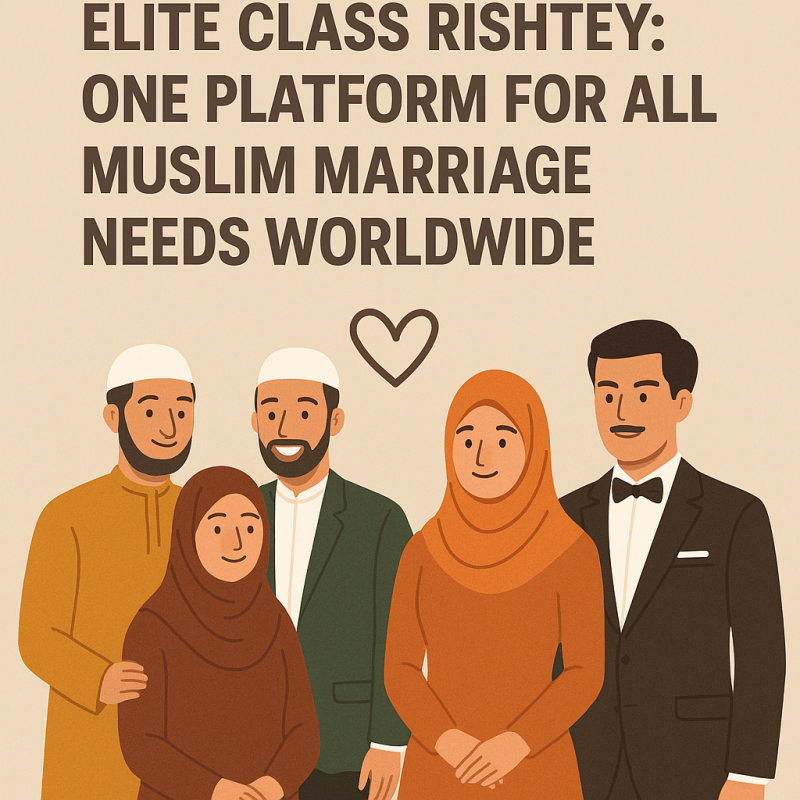
One Platform for All Muslim Marriage Needs Worldwide
Marriage holds profound significance in Islam, described as half of one's deen (faith). It provides companionship, builds families, safeguards society, and fosters spiritual growth. Yet, in many Muslim communities, the search for a suitable partner—known as "rishta" in South Asian cultures—can be complicated by social hierarchies.
Traditionally, families prioritize factors like economic status, family background, education, and sometimes even perceived lineage (such as Ashraf vs. Ajlaf distinctions in some regions). This creates divisions: middle-class families may feel overlooked by elite circles, while high-class and elite families seek matches that align with their lifestyle and expectations.
These challenges are amplified in a globalized world. Muslims from Pakistan, India, the Middle East, Europe, North America, and beyond face geographic barriers, cultural differences, and the pressures of modern life. Traditional methods—relying on family networks, rishta aunties, or community events—often limit options and reinforce class divides. Enter the concept of one platform for all: a single, inclusive Muslim matrimonial space that caters to middle class, high class, and elite class rishtey worldwide. Such an approach aligns with Islamic principles of equality, where piety and character matter more than worldly status.
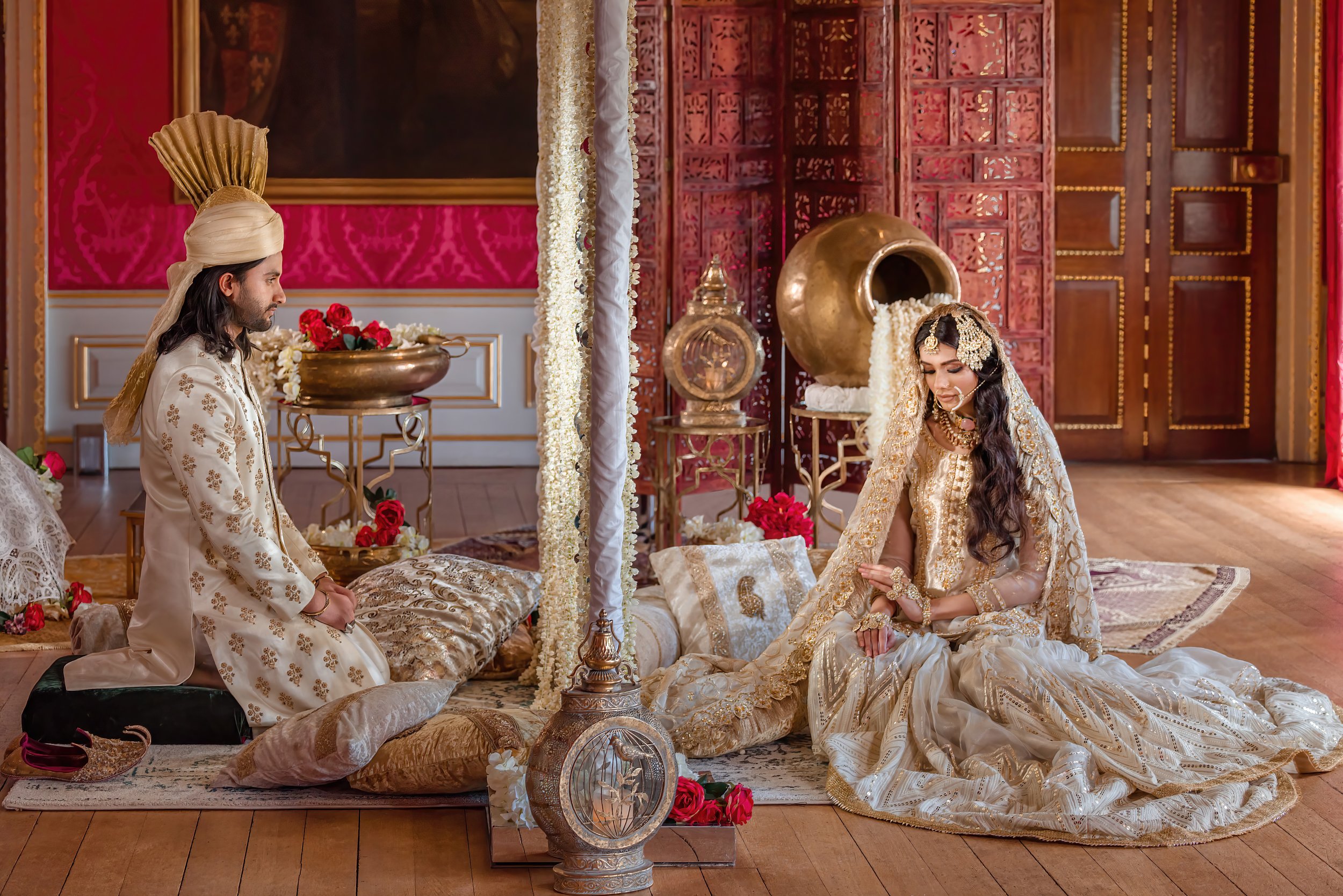
Understanding Social Classes in Muslim Rishta Searches
In many Muslim societies, especially in South Asia and parts of the Middle East, social stratification subtly influences marriage prospects despite Islam's emphasis on equality. Middle-class families—often professionals, teachers, or small business owners—value stability, education, and religious commitment. They seek partners with similar grounded values, where financial security comes from hard work rather than inherited wealth.
High-class families, typically from established business or professional backgrounds, prioritize compatibility in lifestyle, education (often international degrees), and social networks. Elite class rishtey, involving influential families with significant wealth, political ties, or notable lineage, often emphasize exclusivity, family prestige, and shared high-society circles.
Challenges arise when these groups rarely intersect. Elite families may hesitate to consider middle-class proposals due to perceived differences in status or lifestyle. Middle-class individuals might feel intimidated or excluded from elite networks.
High-class families can struggle to find matches that balance ambition with humility. Geographic spread adds complexity— a family in Lahore seeking rishtey might overlook excellent profiles from London or Dubai.
Moreover, issues like caste-like hierarchies (e.g., preferences for certain surnames or ancestries in some communities) persist in practice, contradicting Islamic teachings that judge people by taqwa (God-consciousness), not birth or wealth.
A unified platform addresses these by democratizing access. Everyone registers under the same system, with profiles highlighting deen, education, profession, and family values rather than rigid class labels.
Benefits of One Inclusive Platform
A single platform breaks down barriers and offers numerous advantages:
- Broader Pool of Prospects — Users access profiles from diverse backgrounds worldwide. A middle-class engineer in Punjab can connect with a high-class doctor in the UK, or an elite family in Dubai can discover a pious, educated match from a respected middle-class background in Malaysia. This expands options beyond local or class-restricted circles.
- Emphasis on Islamic Compatibility — Features like filters for sect (Sunni/Shia), prayer habits, religious observance, and values ensure matches align with faith first. This reduces superficial judgments based on class.
- Privacy and Respect — Modern apps allow controlled interactions—chaperoned chats, family involvement, and verified profiles—maintaining modesty and halal boundaries. Families from any class feel secure.
- Efficiency in a Busy World — Busy professionals in high-class or elite circles save time by searching globally without relying on intermediaries. Middle-class users gain visibility without needing influential connections.
- Promoting Unity in the Ummah — By treating all Muslims equally, the platform reflects Islam's rejection of class superiority. Success stories show mixed-class marriages thriving when built on shared faith.
- Global Reach — With millions of Muslims in diaspora communities, one platform connects users across continents, solving issues like finding culturally compatible matches abroad.
Such platforms build on existing successful models in the Muslim matrimony space, which have facilitated hundreds of thousands of marriages by prioritizing halal, respectful matchmaking.
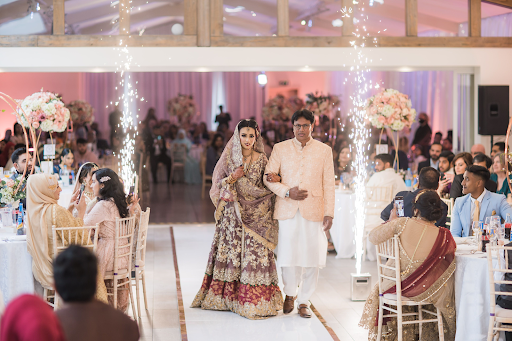
How It Works in Practice
Imagine a middle-class family from Lahore registering their daughter, a software developer with strong deen. Her profile emphasizes her salah routine, education, and family values. An elite family in Saudi Arabia, seeking a pious, educated wife for their son (a successful entrepreneur), finds her through advanced filters. Initial interest leads to family discussions, video calls (with chaperones), and eventual nikah. The marriage succeeds because focus was on character, not class.
Similarly, high-class families benefit from profiles showcasing professional achievements alongside religious commitment, attracting like-minded matches without exclusivity.
The key is inclusivity: no premium tiers that favor wealthier users, transparent verification, and tools for family oversight. This ensures dignity for all.
Success Stories and Future Outlook
Many couples from varied backgrounds have found happiness through inclusive matchmaking. Stories abound of middle-class professionals marrying into high-class families, united by shared Islamic values and mutual respect. These unions strengthen the Ummah, showing that piety transcends socioeconomic lines.
As technology advances, such platforms evolve with features like voice notes, interest tags, and icebreakers—all halal-focused. The future promises even greater unity, reducing cultural pressures and class biases.
In conclusion, a one-platform approach for middle class, high class, and elite class rishtey worldwide represents a progressive, faith-aligned solution. It honors Islamic equality, eases modern challenges, and helps Muslims fulfill the Sunnah of marriage. Whether you're seeking rishta in Pakistan, the Gulf, Europe, or beyond, embracing inclusivity opens doors to blessed unions.
May Allah guide us all to righteous spouses and grant barakah in our marriages. Ameen.